The Complete First-Timer's Guide to Surviving (and Actually Enjoying) Your First Hot Pilates Class
Quick Answer: A first hot Pilates class typically runs 95-105°F, meaning the biggest first-timer risks are dehydration and misjudging intensity in the first 15 minutes before the body has adjusted to the heat — arriving well-hydrated, choosing a spot near the back or a wall, and modifying early rather than pushing through is the most reliable way to get through the first class comfortably.
The heat alone is disorienting for a first timer. Combined with Pilates’ emphasis on small, controlled movements rather than big cardio bursts, it creates a specific kind of challenge that’s worth understanding before walking in.
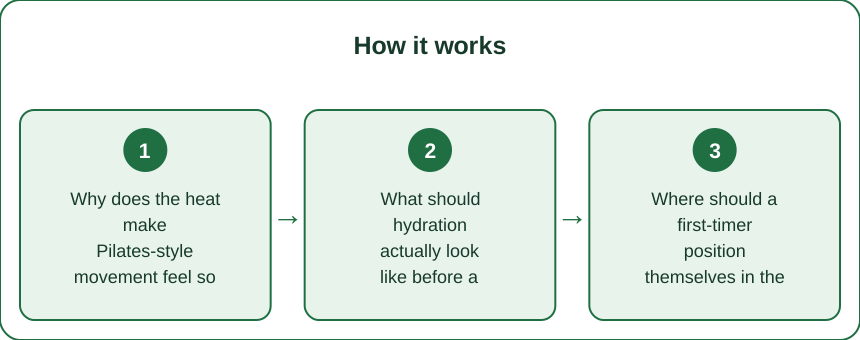
Why does the heat make Pilates-style movement feel so different?
Pilates already relies on sustained muscular control rather than explosive movement, and heat adds cardiovascular strain (elevated heart rate, faster fatigue) on top of that muscular demand. The combination means the body is managing two separate stressors — heat regulation and controlled muscular effort — at the same time, which is part of why hot Pilates feels disproportionately harder than either heat or standard Pilates alone.
What should hydration actually look like before a first class?
Steady hydration for 24 hours before class, not a large volume right before walking in, prepares the body more effectively. A liter or more of water spread through the day prior, plus a smaller amount (8-16oz) in the hour before class, is a reasonable general approach — chugging water minutes before class tends to just cause discomfort during class instead of helping.
Where should a first-timer position themselves in the room, and why?
Near the back or along a wall, rather than front-and-center, gives a first-timer room to modify moves, take unscheduled breaks, and watch other participants for cues without feeling watched themselves — this positioning meaningfully reduces first-class anxiety and makes it easier to actually listen to the body’s signals.
How should the first 15 minutes specifically be approached differently from the rest of class?
The body hasn’t yet acclimated to the room’s heat in the first 15 minutes, meaning perceived effort is often higher during this window than it will be later in the same class once some adaptation has occurred. Deliberately holding back slightly during this opening stretch — rather than matching the room’s energy immediately — prevents overexertion before the body has caught up.
What are the clearest signs a first-timer should sit out a portion of class?
Dizziness, nausea, or a headache are signals to stop and rest, not push through — these are more common in hot studio environments than standard fitness settings and should be taken seriously rather than treated as normal first-class discomfort. Stepping to the side, sitting, and rehydrating is the appropriate response, and instructors in these formats generally expect and accommodate this from first-timers.
What should someone eat, or not eat, before a first hot Pilates class?
A light meal 2-3 hours before class, avoiding anything heavy, high-fat, or unfamiliar, reduces the risk of GI discomfort combined with heat stress. A completely empty stomach isn’t necessarily better either — some available energy helps sustain the class, particularly for a longer 60-minute session.
What’s a reasonable expectation for how the body will feel afterward?
Significant sweating and noticeable fatigue are expected and normal; lingering dizziness, headache lasting more than an hour, or unusual heart rate after leaving are not, and warrant checking in with the studio or a doctor if they persist — this is general information, not medical advice.
TL;DR:
- The combination of heat and controlled Pilates movement is harder than either alone
- Steady hydration over 24 hours beats chugging water right before class
- Positioning near the back or a wall makes modifying and resting easier as a first-timer
- Holding back slightly in the first 15 minutes accounts for the body not yet being heat-acclimated
- Dizziness or nausea are signals to stop, not push through
A first hot Pilates class goes noticeably better with a little preparation — the format rewards knowing what to expect far more than most fitness classes do.
See It in Motion
Seen here: High Waist Printed Bootcut Yoga Pants with Pockets — shop it on bubblelime.com
Keep Reading
This article is for general informational and styling purposes only. Fit, sizing, and product availability may vary.