The Complete Guide to Eating Around Hot Pilates Classes
Quick Answer: Aim for a full meal 2-3 hours before, or a small carbohydrate-focused snack 30-60 minutes before. Heat slows digestion and diverts blood toward the skin, so food that would be fine before a normal class can sit heavily in a heated room. Afterward, prioritize fluid and sodium first, then eat a proper meal within about two hours. The nausea people blame on the heat is very often a timing problem.
You either feel food sloshing during the ab series, or your arms give out in the last ten minutes and you can’t work out why.
Both are timing problems, and they have different fixes.

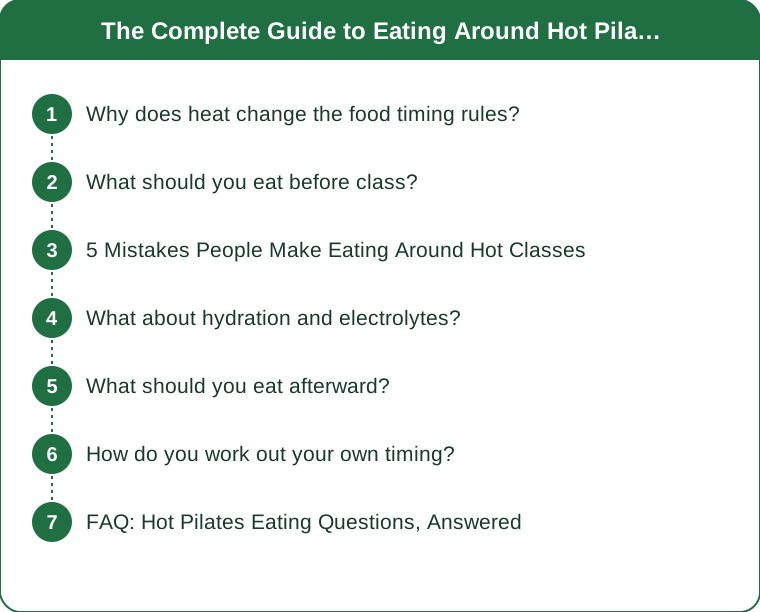
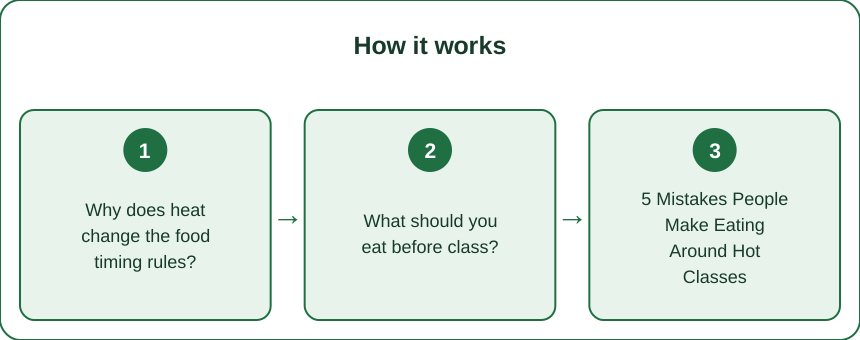
Why does heat change the food timing rules?
Three mechanisms, and together they explain nearly every hot-class stomach complaint.
Blood flow gets redirected. In a heated room, your body sends significantly more blood toward the skin to shed heat. That blood comes from somewhere — partly from the digestive system. Food that was mid-digestion at class start sits there longer, which is what produces the heavy, sloshing sensation.
Gastric emptying slows. Digestion is genuinely slower under heat stress and exercise combined. A meal that would clear comfortably in 90 minutes before a normal class may still be sitting there in a 95°F room.
Core temperature and nausea are linked. As core temperature rises, nausea becomes more likely regardless of stomach contents — and a full stomach lowers the threshold considerably. This is why the same pre-class snack can be fine in a cool studio and unpleasant in a hot one.
There’s a fourth factor specific to Pilates: the movement patterns work against you. Hot Pilates involves a great deal of flexion, rotation, and time spent with the abdominal wall compressed. Unlike running, where the torso stays relatively upright, you’re actively squeezing your midsection for much of the class. Food that would sit fine during a heated cycling class becomes conspicuous here.
The practical implication: the standard fitness advice about eating an hour before a workout is calibrated for cooler, more upright exercise. In a hot Pilates room, it’s often too close.
What should you eat before class?
It depends entirely on how much time you have, and these are genuinely different recommendations rather than variations on one.
2-3 hours before: a proper meal. This is the ideal window and the one to aim for when you can plan. Balanced meal, moderate portion, nothing unusually fatty or high in fiber. Examples that work well:
- Rice with chicken and a modest amount of vegetables
- Pasta with a simple sauce
- Oatmeal with banana and a spoon of nut butter
- A sandwich with lean protein
60-90 minutes before: a light snack. Mostly carbohydrate, low fat, low fiber, low protein. Fat and fiber both slow gastric emptying, which is exactly what you don’t want.
- A banana
- Toast with honey or jam
- A small bowl of white rice
- A handful of dried dates or a plain rice cake
30 minutes or less: very little, or nothing. Half a banana, a few dates, or a sports drink. At this range, anything substantial will still be in your stomach when the room hits temperature.
Fasted: perfectly fine for a 50-minute class if you’ve eaten normally the day before. Glycogen stores cover an hour of moderate work without needing a pre-class top-up. The exception is early-morning classes after a light dinner, where a small carbohydrate snack noticeably helps.
What to avoid within three hours regardless: high-fat meals, very large portions, anything spicy, high-fiber foods like beans or large raw salads, and carbonated drinks. Each of these independently increases the chance of a bad 50 minutes.
5 Mistakes People Make Eating Around Hot Classes
1. Applying normal-class timing to a heated one. The common rule of a light snack an hour before is calibrated for cooler exercise. In a hot room, that same snack is often still present. Push it earlier by 30 minutes and most people’s nausea resolves.
2. A big protein shake right before. Protein slows gastric emptying and shakes are typically large in volume. Both work against you in a heated room. Save it for afterward, where it’s genuinely useful.
3. Drinking a liter of water in the 20 minutes before class. People know they need to hydrate and then compress it into the last moment. A stomach full of fluid sloshes as much as one full of food, and rapid intake of plain water is worse for you than useful — it doesn’t have time to be absorbed. Spread fluid across the whole day.
4. Eating nothing at all, all day, before an evening class. Fasted works for a morning class after overnight recovery. It works badly at 6pm after a light lunch — that’s when people report shaking arms, dizziness, and the drop in the last third of class.
5. Skipping food afterward because you’re not hungry. Appetite is suppressed after heat exposure, and it returns hours later, often as ravenous evening hunger. Eat something within a couple of hours regardless of whether you feel like it. This is the single most common reason people report being starving late at night after an evening class.

What about hydration and electrolytes?
This matters more than the food question, and it starts long before class.
Before: hydrate across the whole day rather than in the hour before. A useful marker is pale straw urine by mid-afternoon. Drinking 500ml right before class mostly just gives you a full stomach.
During: small sips. Large volumes of cold water during a hot class are a common trigger for nausea. Room-temperature water tends to sit better than ice water, which surprises people.
Sodium is the piece most people miss. In a heated class you can lose a substantial amount of sodium in sweat, and replacing it with plain water alone leaves you with a diluted electrolyte balance — which produces exactly the headache, fatigue, and slight nausea people attribute to dehydration. If you sweat heavily, if you see white salt marks on your clothes afterward, or if you take multiple hot classes a week, an electrolyte drink is more useful than more water.
A practical guide: for a single 50-minute class, water is usually sufficient if you’re eating normally, since a normal diet supplies plenty of sodium. For back-to-back classes, hot classes in a hot season, or anyone who sweats unusually heavily, add electrolytes.
Post-class: drink to thirst over the following hours rather than forcing a large volume immediately. Including sodium — through your next meal or an electrolyte drink — helps you actually retain the fluid rather than passing it straight through.
What should you eat afterward?
Order matters, and it’s fluid first.
Immediately after (0-30 minutes): fluid with some sodium. If you’re hungry, something small and easy — fruit, yogurt, a small smoothie. Many people have no appetite at this point, and that’s normal.
Within about two hours: a proper meal with carbohydrate and protein. This is the window that matters for recovery, and it’s a comfortable one — there’s no need to eat within a strict 30-minute window, and the old anabolic window framing has been substantially walked back.
Reasonable post-class meals:
- Eggs on toast with fruit
- Rice bowl with protein and vegetables
- Greek yogurt with granola and berries
- A sandwich and a piece of fruit
For evening classes specifically: eat a real meal even if it’s late and even if you’re not hungry. Skipping it is the reliable cause of both the 11pm hunger and the poor sleep that follows it. If a full meal feels like too much, something moderate is far better than nothing.
A note on appetite: heat suppresses appetite short-term, and it returns with interest a few hours later. Knowing this in advance means you can plan around it rather than being ambushed by it at bedtime.
How do you work out your own timing?
The recommendations above are a starting point. Individual tolerance varies enormously, and it’s worth spending a few weeks finding yours.
Run a simple test across four classes:
- Class 1: eat a normal meal 3 hours before
- Class 2: small carbohydrate snack 60 minutes before
- Class 3: small snack 30 minutes before
- Class 4: fasted
After each, note three things: any stomach discomfort, your energy at the 30-minute mark, and your energy in the final ten minutes. Four data points usually make the pattern obvious.
What the results tell you:
- Discomfort early in class means the food was too close or too large
- Fading in the final third means too little, or too long since eating
- Feeling fine throughout means you’ve found your window — write it down
Adjust for the class itself. A 6am class and a 7pm class have completely different requirements, because one follows an overnight fast and the other follows a full day of eating. Most people need separate rules for each, and trying to run one rule for both is why timing feels inconsistent.
This is general information, not medical advice. If you get persistent nausea, dizziness, or lightheadedness in heated classes despite adjusting your timing, stop and check in with a healthcare professional — and mention it to your instructor, who can advise on room position and pacing.
FAQ: Hot Pilates Eating Questions, Answered
Can I take a hot class first thing in the morning without eating?
Yes, for a 50-minute class, provided you ate normally the day before. If you feel shaky partway through or your dinner the night before was light, half a banana or a few dates 20 minutes beforehand usually solves it without sitting heavily.
Why am I starving hours after class but not right after?
Heat exposure suppresses appetite short-term, and the effect wears off a few hours later. It’s a timing shift, not reduced need. Eat a proper meal within a couple of hours regardless of appetite and the late-night hunger largely disappears.
Is coffee before a hot class a bad idea?
For most people it’s fine and can help with focus. It does raise heart rate, which is already elevated by the heat, so if you’re prone to feeling racy or lightheaded in class, try one without and compare. Coffee on a completely empty stomach before a heated class is the combination most likely to cause nausea.
Should I eat differently for hot Pilates than hot yoga?
Slightly. Hot Pilates involves more sustained abdominal compression and more flexion, so a full stomach is more noticeable. If you’ve been applying your hot yoga timing and feeling unsettled, push the meal back another 30 minutes.
TL;DR:
- Heat slows digestion and redirects blood away from the stomach, so normal pre-workout timing is often too close for a hot class.
- Full meal 2-3 hours before, or a small low-fat carbohydrate snack 30-60 minutes before.
- Hot Pilates specifically involves sustained abdominal compression, which makes a full stomach more noticeable than in other heated classes.
- Hydrate across the whole day, not in the last 20 minutes, and add sodium if you sweat heavily or train frequently.
- Afterward: fluid first, then a proper meal within two hours — even if appetite hasn’t returned yet.
Run the four-class timing test over the next two weeks. Most people find their window on the second or third try, and the nausea they’d assumed was just part of hot classes turns out to have been a 30-minute scheduling problem.
See It in Motion
Seen here: High Waist Yoga Leggings with Side Pockets — shop it on bubblelime.com
Keep Reading
This article is for general informational and styling purposes only. Fit, sizing, and product availability may vary.