The Complete Guide to Hot Pilates and Your Skin
Quick Answer: Heat and sweat do not cause breakouts on their own. What causes trouble is sweat left to dry on the skin, makeup and heavy product occluding pores in a 95 to 100°F room, and friction from hands, hair, and mats. The protective routine is short: train with a clean, bare face, keep hair off it, rinse within 20 minutes, and use a light barrier-supporting moisturizer afterward. Skip actives on class days. Done consistently, most people find heated classes neutral or mildly beneficial for their skin rather than harmful.
The people whose skin suffers from heated classes are almost always doing one of three specific things, and all three are easy to change.
What actually happens to your skin in a heated room?
Several things at once, and they pull in different directions.
Blood flow to the skin increases substantially. Vasodilation is how your body sheds heat, and it delivers more oxygen and nutrients to skin tissue in the process. This is the source of the post-class glow, and it is real rather than imagined - though it is temporary, lasting perhaps an hour.
Sweat production ramps up dramatically. In a room at 95 to 100°F, you may lose 500ml to over a litre in a 50-minute class. Sweat is mostly water, but it also carries salt, urea, lactate, and trace minerals.
Pores appear more open in heat. Pores do not have muscles and do not literally open and close, but heat softens sebum and makes it more fluid, which is why skin looks and feels different in a heated room. Softened sebum flows more easily, which is broadly good - it is what makes heat useful before extraction in facials.
The skin barrier is temporarily challenged. Heat, sweat, and friction all disrupt the lipid barrier slightly. It recovers within hours, but during that window the skin is more permeable and more reactive - which is why an active applied straight after class can sting when it never normally would.
And salt is left behind as sweat evaporates. This is the mechanism behind most heated-class skin problems. Salt is drying and mildly irritating, and it sits on the skin until something removes it - which is why the 20 minutes after class matter more than anything you do before.
Why do some people break out and others glow?
The difference is almost entirely behavioral rather than genetic.
Makeup in a heated room is the biggest single factor. Foundation, primer, and heavy sunscreen combine with sweat and heat to occlude pores at exactly the moment sebum production is highest. This is the most common cause of post-class breakouts and the easiest to eliminate.
Sweat left to dry is the second. Salt, sebum, and bacteria sitting on warm skin for an hour after class is an ideal environment for irritation and for the bacteria involved in acne. The 20-minute window after class is where this is decided.
Hands and hair transfer everything. Wiping your face with your hands, with a shared studio towel, or with hair that has product in it moves oil and bacteria around. Face-touching during class is nearly unconscious and it is one of the most common contributors.
Mat and towel hygiene matters. A mat that lives rolled up in a damp bag, or a towel used across several classes, carries bacteria directly to skin that is warm, sweaty, and slightly barrier-compromised. This is a frequent cause of body breakouts on the back and chest specifically.
And existing conditions respond differently. Rosacea often flares with heat, and eczema can be aggravated by sweat and salt. Neither means heated classes are off the table, but both mean the after-class routine matters considerably more.
What should you do before class?
Less than most people do, and the removals matter more than the additions.
Arrive with a clean, bare face. Remove makeup before class rather than after. If you come straight from work, a micellar wipe in the changing room takes thirty seconds and prevents most of the problem. This is the single highest-value habit in this guide.
Skip heavy moisturizer and skip oils. Occlusive products trap sweat and heat against the skin. If your skin is dry, a light water-based hydrating gel is fine; a rich cream is not.
Sunscreen is an evening-class exception. Sunscreen matters, but a heavy SPF formula in a hot room is occlusive. For an evening class, cleanse it off first; for a daytime class you are traveling to in sunlight, use a light fluid formula and accept the trade-off.
Tie your hair back properly, and off your face. Not just in a ponytail - away from the hairline and jaw, where hair product and oil transfer during class. Forehead and jawline breakouts are frequently a hair-contact problem.
Skip actives that day. Retinoids, acids, and vitamin C on skin that is about to be heated, sweated on, and rubbed is a reliable route to irritation. Move them to non-class evenings - this single scheduling change resolves a lot of unexplained sensitivity.
And bring your own towel. A clean face towel that is used once and washed is worth more for your skin than any product in this section.
What should you do after class?
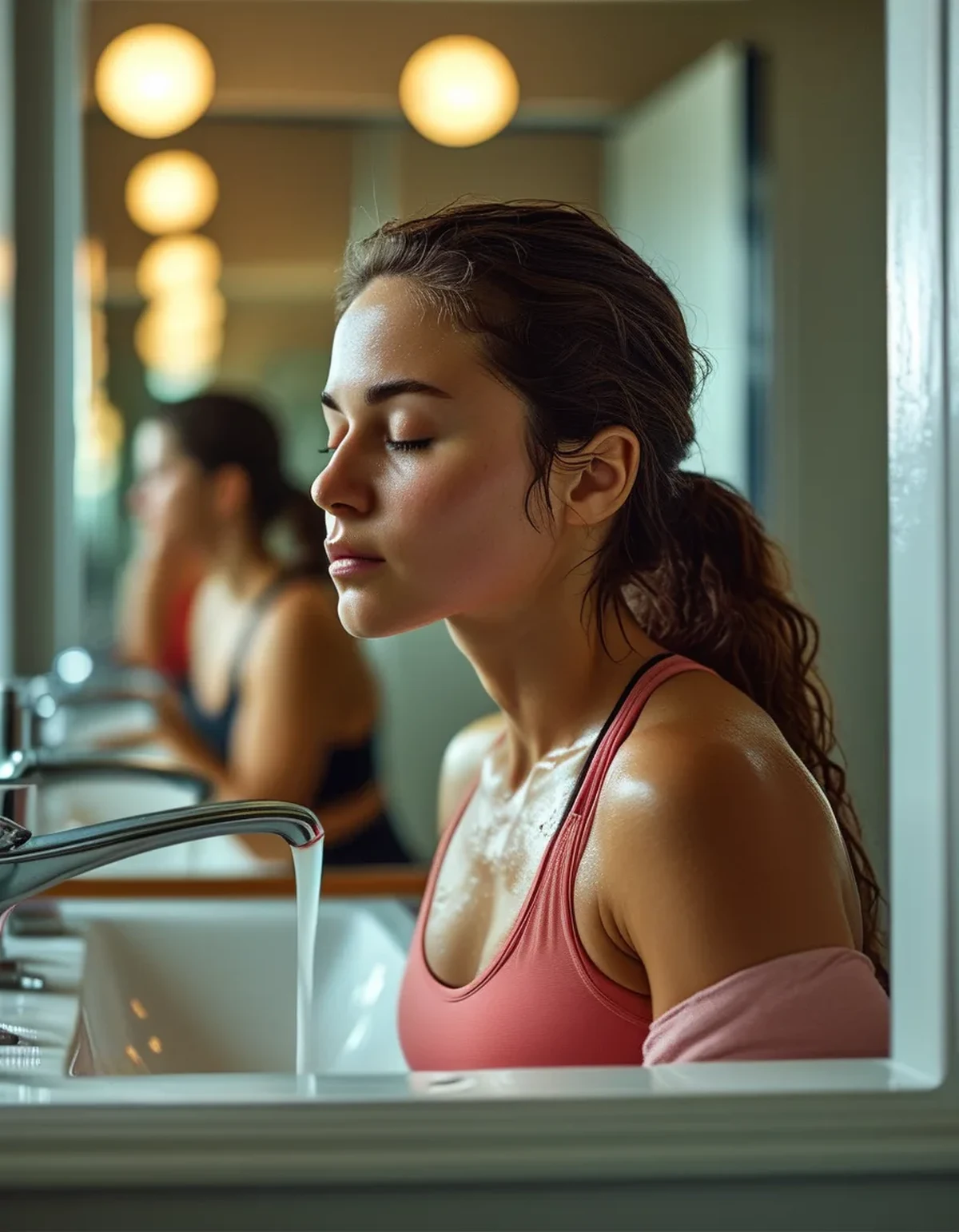
The 20-minute window is where nearly all of the outcome is decided.
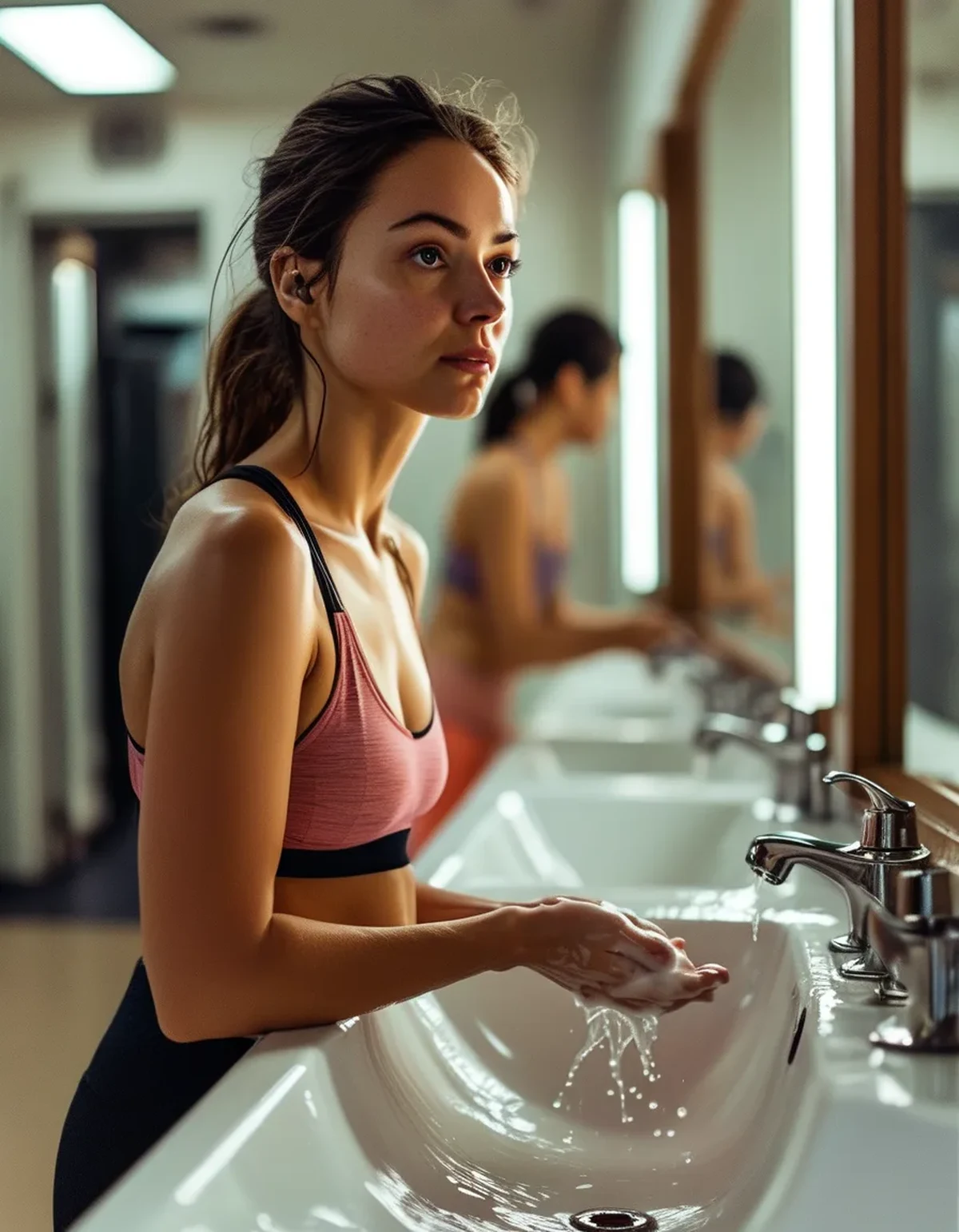
Rinse within 20 minutes if you can. Even plain lukewarm water removes most of the salt. A gentle cleanser is better, but water alone is dramatically better than nothing. The full shower can wait; the face rinse should not.
Use lukewarm water, not hot. Hot water on flushed skin with a temporarily compromised barrier increases irritation and prolongs redness. Cool-to-lukewarm is what you want.
Use a gentle cleanser, not a foaming or exfoliating one. The barrier is already challenged. A creamy or gel cleanser without sulfates or actives is the right choice for class days.
Pat dry, never rub. Friction on warm, slightly permeable skin is exactly what you have just spent an hour avoiding.
Apply a light barrier-supporting moisturizer. Niacinamide, ceramides, panthenol, or a simple hydrating gel. Skip actives entirely for at least a few hours - the skin’s increased permeability means an acid or retinoid will penetrate more than intended and sting.
Change out of damp clothes immediately. This is about body skin, and it matters. Sitting in a wet sports bra for the drive home is one of the most common causes of back and chest breakouts among people who take heated classes regularly.
And rinse or wipe your mat after every class. A simple water-and-alcohol spray, wiped and air-dried, prevents a mat from becoming the source of the problem you are otherwise carefully managing.
How does the seasonal turn change all of this?
Late summer into autumn shifts the balance in ways that catch people out.
Indoor heating arrives while studio heat stays constant. The contrast between a 100°F studio and increasingly dry indoor and outdoor air becomes sharper. That swing is what challenges the barrier, more than either temperature alone.
Indoor humidity drops sharply once heating starts. Skin that was comfortably hydrated in humid August air becomes dehydrated in October, and dehydrated skin can overproduce oil in compensation - which is why some people break out more in autumn despite doing nothing differently.
Post-class routines need more occlusion, not less. The lightweight gel that was ideal in summer may not hold hydration in dry autumn air. Adding a light moisturizer over the hydrating layer is the standard seasonal adjustment.
Cold air on flushed skin after class is a rosacea trigger. Walking out of a heated studio into cold air produces rapid vasoconstriction after prolonged dilation. If you are prone to flushing, cool down inside for five minutes before leaving and cover your face on the way out.
Sweat evaporates faster in dry air, which means salt is left on the skin sooner. The 20-minute rinse window becomes more important, not less, as the humidity drops.
And summer’s accumulated damage surfaces now. Sun exposure over June to August shows up as pigmentation and dryness in September. This is the season people start reaching for actives - so it is also the season to be deliberate about scheduling them away from class days rather than stacking them on top.
When is it a skin problem and when is it something else?
Some things that look like breakouts are not, and treating them as acne makes them worse.
Folliculitis looks like acne but is not. Small, uniform, sometimes itchy bumps - often on the back, chest, or thighs - caused by inflamed hair follicles rather than clogged pores. It is associated with sweat, occlusive clothing, and shared equipment. Acne treatments do little for it, and it usually responds to hygiene changes and, if persistent, a doctor’s input.
Heat rash (miliaria) appears in occluded areas. Tiny clear or red bumps where sweat ducts are blocked, typically under sports bra bands and waistbands. It resolves with cooling and loose clothing.
Contact irritation from mats and cleaning sprays is common. Studio cleaning products can leave residue that irritates skin in prolonged contact. If your reactions are in the exact shape of where you contact the mat, this is the likely cause - bring your own mat and test it.
Rosacea flares are redness rather than bumps, and are usually accompanied by flushing from other triggers - alcohol, hot drinks, spicy food. Heated classes are a known trigger, and this is worth a dermatologist rather than a skincare change.
Fungal acne (malassezia folliculitis) is a specific and frequently misdiagnosed one. Uniform small bumps on the forehead, chest, and back that do not respond to standard acne treatment and often worsen with oils and heavy moisturizers. It thrives in warm, sweaty conditions.
The general rule: anything that is uniform, itchy, does not respond to normal acne care, or appears in the shape of clothing or equipment contact is probably not acne - and is worth showing to a professional rather than treating for months on guesswork.
This is general information, not medical advice. Persistent or worsening skin reactions should be assessed by a dermatologist.
FAQ: Hot Pilates Skin Questions, Answered
Should I wash my face before or after class?
Both, ideally - before, to remove makeup and product, and after, to remove salt and sweat. If you only manage one, make it the after-class rinse within 20 minutes.
Can I wear makeup to a heated class?
Best avoided. Makeup plus heat plus sweat is the most common cause of post-class breakouts. If you must arrive made up, remove it in the changing room before class.
Does sweating detox your skin?
No - detoxification happens in the liver and kidneys. Sweat is thermoregulation. Increased blood flow does give a temporary glow, and softened sebum flows more easily, but nothing is being cleaned out.
Why do I break out on my back and chest but not my face?
Usually damp clothing and mat contact rather than facial skincare. Change out of wet gear immediately, shower reasonably promptly, and clean your mat - those three fix most cases.
Can I use retinol on class days?
Better not to. Move retinoids and acids to non-class evenings; skin that has been heated, sweated on, and rubbed is more permeable and considerably more likely to react.
TL;DR:
- Heat itself is not the problem - makeup in a heated room, sweat left to dry, and friction are.
- Before: bare clean face, hair fully back, no heavy products, no actives that day.
- After: rinse within 20 minutes with lukewarm water, gentle cleanser, pat dry, light barrier-supporting moisturizer, change out of damp clothes immediately.
- As heating starts and humidity drops, add occlusion after class and cool down inside for five minutes before stepping into cold air.
Most people who find heated classes bad for their skin are doing one of three fixable things. Fix those and the classes are usually neutral or mildly positive - and if what you are seeing is uniform, itchy, or shaped like your clothing, treat that as a signal to see a professional rather than to buy another cleanser.
See It in Motion
Seen here: Racerback Tank Top - White — shop similar styles on bubblelime.com
Keep Reading
This article is for general informational and styling purposes only. Fit, sizing, and product availability may vary.