Why Hot Pilates Feels Completely Different From Class to Class
Quick Answer: The same hot Pilates class can feel wildly different day to day because of room temperature swings, your hydration and sodium levels going in, and where you are in your menstrual cycle — all of which change heat tolerance more than your actual fitness level does.
Monday’s class felt like nothing. Thursday’s identical class nearly took you out. Same instructor, same room, same routine — and yet the intensity felt completely different. That inconsistency is real, and it’s mostly explained by factors outside the workout itself.

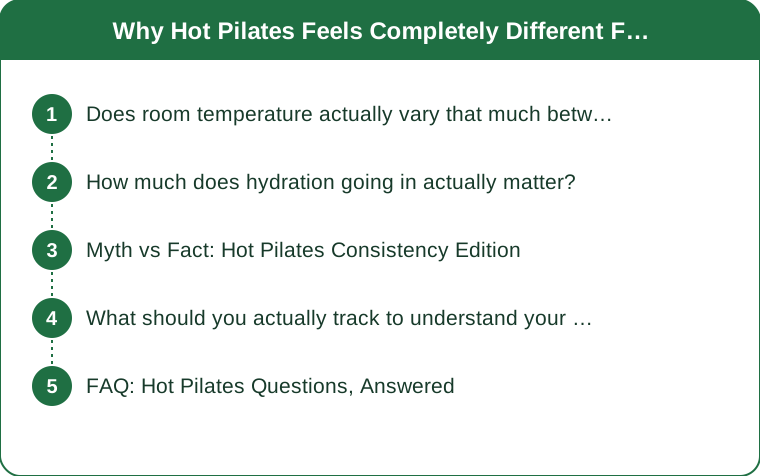
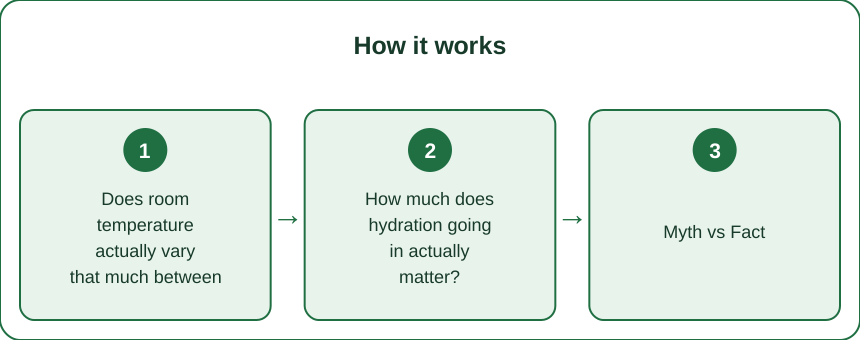
Does room temperature actually vary that much between classes?
Yes — heated studios commonly swing 5-10°F between classes depending on how full the room is, time of day, and HVAC cycling, even when the thermostat is set the same. A fuller room with more bodies generating heat runs measurably hotter than a half-empty one, changing how hard the same movements feel.
How much does hydration going in actually matter?
Substantially — starting a heated class even mildly under-hydrated (skipping water for a few hours beforehand) makes your body work harder to regulate temperature, which shows up as the class feeling disproportionately harder. Pre-hydrating with electrolytes 1-2 hours before, not just chugging water right before class, makes a measurable difference.

Myth vs Fact: Hot Pilates Consistency Edition
Myth: If it feels harder, you’re less fit than last week. Fact: Heat tolerance and hydration status swing far more day to day than actual fitness does — a harder-feeling class rarely reflects a real fitness regression.
Myth: The room temperature is always the same if the studio says it is. Fact: Occupancy and HVAC lag mean actual room temperature varies meaningfully class to class, regardless of the posted thermostat setting.
Myth: Cycle timing doesn’t affect heat tolerance. Fact: Body temperature naturally runs slightly higher in the luteal phase (after ovulation), which can make identical heated workouts feel harder during that window.
What should you actually track to understand your own pattern?
Note time of day, roughly how full the room felt, and your hydration beforehand for a few classes. Most people find a clear pattern emerges — usually hydration and room fullness explain the bulk of the variation, not any change in fitness.
FAQ: Hot Pilates Questions, Answered
How should I hydrate before a hot Pilates class?
Electrolytes 1-2 hours before class works better than large amounts of plain water right beforehand, which can leave you sloshing without actually improving heat tolerance.
Is it normal to feel dizzy in some classes but not others?
Occasional mild lightheadedness tied to heat and hydration swings is common; frequent or severe dizziness is worth mentioning to the instructor or a doctor rather than pushing through.
Does the time of day change how hard the class feels?
Yes — later classes in a heavily used studio tend to run warmer from accumulated heat, and your own body temperature also naturally varies through the day.
TL;DR:
- Room temperature can swing 5-10°F between classes even at the same posted setting
- Under-hydrating before class makes the same workout feel disproportionately harder
- Cycle timing (luteal phase) can raise perceived heat difficulty independent of fitness
- Track hydration and room fullness for a few classes to spot your own pattern
See It in Motion
Seen here: High Waist Yoga Leggings with Inner Pocket — shop it on bubblelime.com
Keep Reading
This article is for general informational and styling purposes only. Fit, sizing, and product availability may vary.