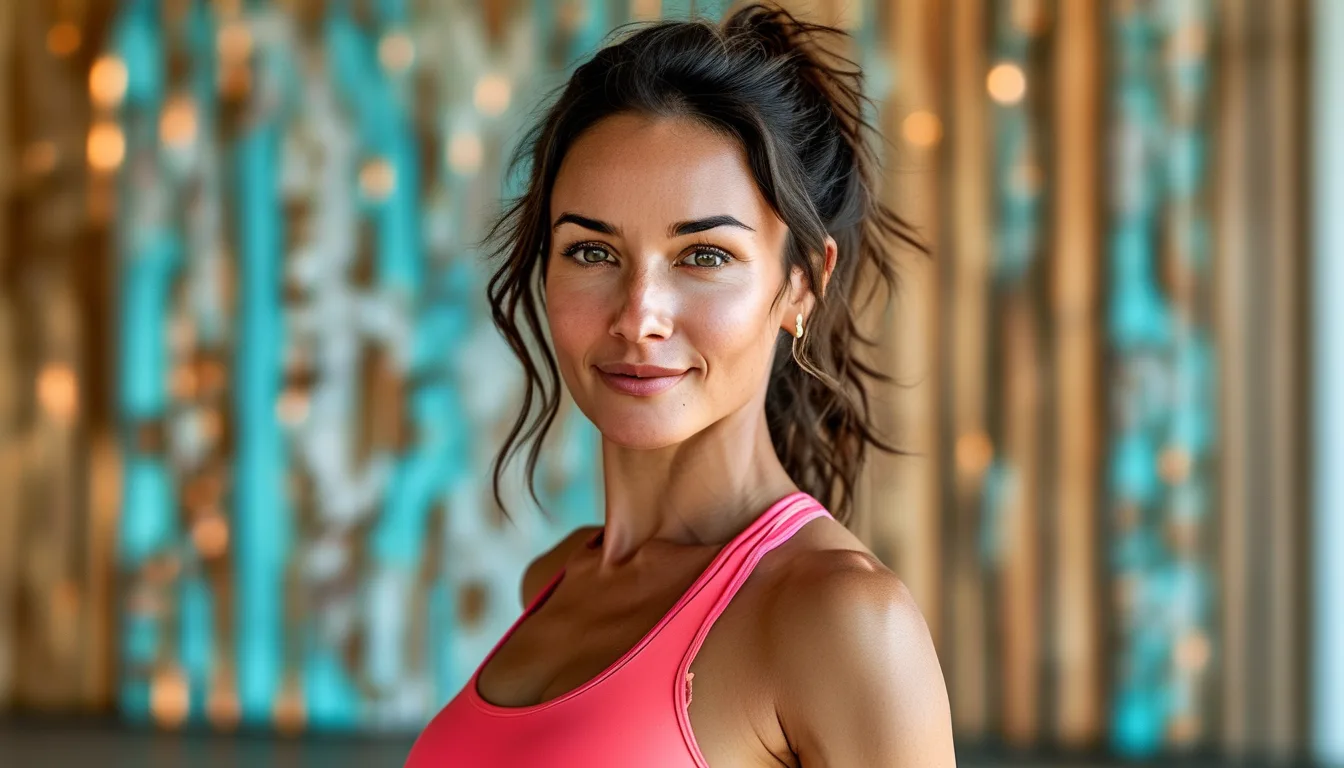
Why When You Hydrate Before Hot Pilates Matters More Than How Much
Quick Answer: Chugging 20 oz in the parking lot before hot pilates doesn’t hydrate you — it mostly gives you a sloshing stomach and a bathroom trip. Fluid needs roughly 1–2 hours to actually distribute. Drink steadily across the 2–4 hours before class, taper in the final 30 minutes, and stop treating total volume as the whole story.
Big water bottle, drained in the car, walking into a 95°F studio feeling responsible.
Twenty minutes into class you’re both sloshing and thirsty, which shouldn’t be possible and absolutely is.
This is general information, not medical advice.

Why Does Hydration Timing Matter More Than Total Volume?
Because drinking water and being hydrated are separated by time.
Fluid you swallow has to be absorbed through the gut and distributed into your blood volume and tissues before it’s doing anything useful for thermoregulation. That process takes time — roughly on the order of an hour or two for a meaningful volume, not the ten minutes you have left before class starts.
So water consumed in the parking lot is, at class time, still mostly in your stomach. It’s contributing weight and discomfort during the exact movements — twists, planks, anything face-down — where a full stomach is least welcome. Meanwhile the heat is pulling fluid out of a blood volume that hasn’t been topped up yet.
The right amount at the wrong time still leaves you under-hydrated when the sweat response kicks in. That’s the whole problem in one sentence, and it’s why “did I drink enough?” is the wrong question to be asking at 6:50 for a 7:00 class.

What Are the Timing Windows That Actually Help?
Think in three windows rather than one number.
2–4 hours before class: the window that does the real work. Drink steadily here — roughly 12–20 oz spread across that stretch rather than in one go. This is the fluid that will actually be circulating when the room gets hot. If you only get one window right, make it this one.
Roughly 30–60 minutes before: a small top-up. Something like 6–8 oz. Enough to arrive comfortable, not enough to slosh.
The last 20–30 minutes: essentially stop. A few sips if your mouth is dry. Anything more is arriving in your stomach, not your bloodstream, and it’s arriving right when you’re about to lie on it.
The honest check on all of this is urine color. Pale straw a couple of hours before class means the earlier windows worked. Dark yellow at that point can’t be fixed by a large last-minute drink — it can only be partially compensated for, and the compensation costs you comfort.

5 Mistakes Everyone Makes Right Before a Heated Class
- The parking-lot chug. Covered above, and by far the most common. It converts a hydration plan into a digestion problem.
- Counting the pre-class coffee as neutral. Caffeine is fine and doesn’t dehydrate you dramatically, but a large coffee as your main pre-class fluid isn’t the same as water in the 2–4 hour window.
- Skipping fluid at lunch and planning to catch up. You can’t catch up in 15 minutes. The window closed hours ago.
- Only drinking water for a heavy-sweat class. For a genuinely sweaty session, sodium matters — plain water alone can leave you feeling flat.
- Ignoring what you ate. The third mistake surprises people, but this is the sneaky one: fluid from food counts, and a day of dry snacks leaves you further behind than you think.

How Do You Build This Into a Normal Day?
Work backward from class time rather than forward from good intentions.
For an evening class, the 2–4 hour window is your afternoon. Keep a bottle at your desk and finish it by roughly 90 minutes out. Done.
For an early morning class, you’re starting from an overnight fluid deficit and you don’t have a 4-hour runway. The practical adaptation is to hydrate well the evening before, then take 8–10 oz on waking, 45–60 minutes before class. Morning classes are the hardest case, and pretending otherwise leads people to over-drink at 5:50 a.m.
For heavy sweaters or long sessions, add sodium to the earlier window — an electrolyte tab, or just something salty with the preceding meal.
Comfort is part of this too. Heat plus repeated positional changes means anything that shifts becomes a distraction fast. Squat-proof high waist leggings that stay put through inversions and a top that doesn’t ride up let you spend the class thinking about your breathing instead of your waistband.
When to see a professional: dizziness, nausea, confusion, or stopping sweating in a heated class are reasons to leave the room and get help, not to push through. If you’re pregnant, managing a heart or kidney condition, or on medication affecting fluid balance, ask a doctor before regular heated classes. This is general information, not medical advice.
FAQ
How much water should I drink before hot pilates?
Roughly 12–20 oz spread across the 2–4 hours before class, plus a 6–8 oz top-up around 30–60 minutes out. Adjust for your size, the room, and how heavily you sweat — the schedule matters more than the exact number.
Can I drink water during class?
Small sips are fine and normal. Just don’t rely on in-class drinking to make up a deficit — absorption is too slow for it to help within the session itself.
Do I need electrolytes or is water enough?
For a typical 50-minute class, water plus a normal diet is usually enough for most people. For long or exceptionally sweaty sessions, or if you cramp regularly, sodium is worth adding to the pre-class window.
TL;DR
- Timing beats volume. Fluid needs roughly 1–2 hours to be absorbed and distributed.
- Three windows: steady drinking 2–4 hours out, a small top-up at 30–60 minutes, near-nothing in the final 20–30.
- The parking-lot chug fails — it sits in your stomach during exactly the wrong movements.
- Check urine color a couple of hours before class; that’s when you can still act on it.
- Leave the room for dizziness, nausea, or confusion, and check with a doctor if you have relevant medical conditions.
See It in Motion
Seen here: High Waist Yoga Leggings with Inner Pocket — shop it on bubblelime.com
Keep Reading
This article is for general informational and styling purposes only. Fit, sizing, and product availability may vary.