How to Approach Your First Eight Weeks of Hot Pilates
Quick Answer: Give yourself eight weeks, starting with two classes a week rather than three or more. Heat acclimation takes about 10 to 14 sessions, hydration needs managing from the day before, and the common quit point is weeks two to three when the novelty has gone and acclimation has not finished. Position yourself near the door or a vent for the first month.
Hot pilates is unusual among group classes in that the first few sessions tell you almost nothing about whether you will like it. The heat dominates everything, and the heat is the part that changes fastest.
Here is how the first eight weeks actually go, and what to do at each stage.
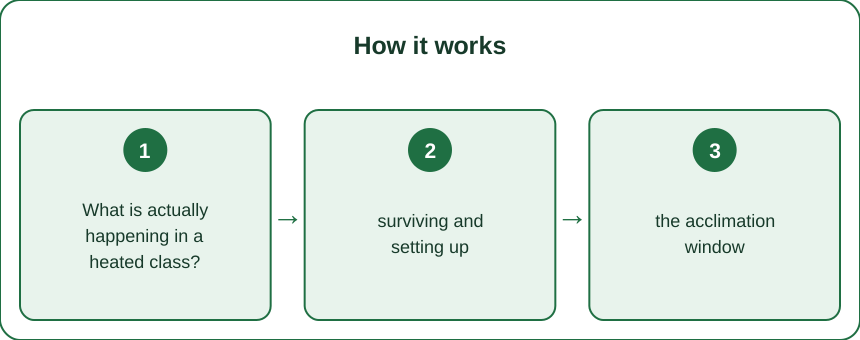
What is actually happening in a heated class?
Two separate stressors that people tend to blend together.
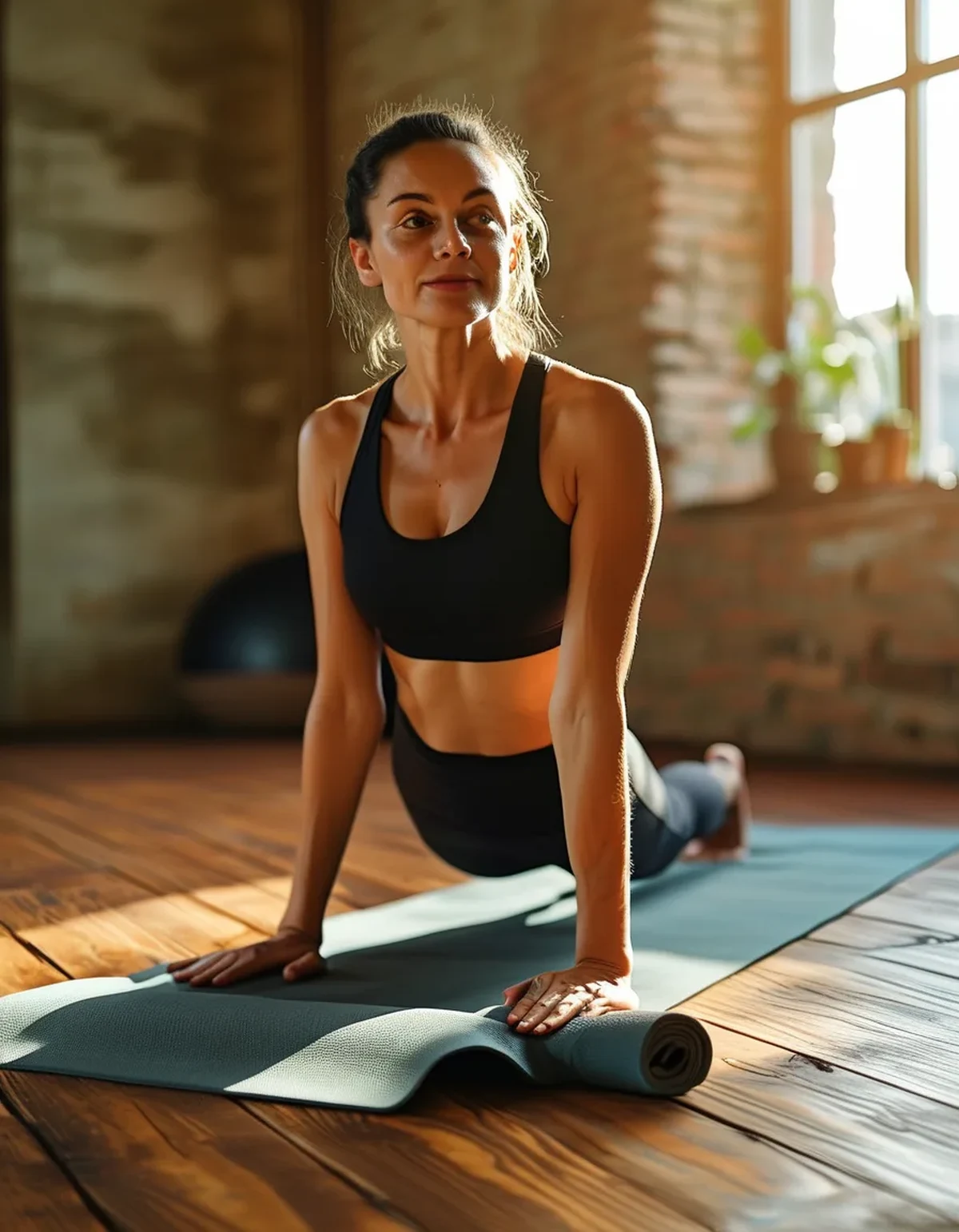
The pilates itself is a controlled, low-impact strength and control practice — sustained isometric holds, small-range repetitions, and core emphasis. That is demanding in its own right and the demand is largely muscular endurance.
The heat adds a substantial cardiovascular load on top. In a room at 32 to 40°C, the body diverts blood to the skin for cooling, which reduces the blood available to working muscle and raises heart rate at any given workload. Sweat rates rise sharply, and fluid losses of one to two litres in a 50-minute class are common.
Together, these produce an experience where your heart rate suggests hard cardio while your muscles are doing endurance work. That combination is why first-timers so often describe it as harder than expected in a way they cannot quite locate.
Studios vary considerably in temperature — anywhere from a mild 30°C to 40°C, with humidity varying even more, and humidity matters more than temperature for how hard cooling is. Ask before booking. A 35°C class at low humidity and a 32°C class at high humidity are very different rooms.
The important framing: the heat is not the training stimulus. It is a stressor layered over the training. Most of the benefit you are after comes from the pilates.
Weeks 1–2: surviving and setting up
The goal for the first two weeks is attendance and orientation, not performance.
Go twice a week, not more. Everyone who quits hot pilates in month one started with four classes a week. Two sessions give adaptation time and keep each class something you look forward to.
Position yourself near a door, a vent, or the back. Studios have real temperature gradients, and the middle of the room is usually the hottest, least ventilated spot. There is no prize for the hot corner.
Expect to sit out. Taking a knee, going to child’s pose, or stepping out is standard practice and instructors expect it. Feeling lightheaded, nauseated, or suddenly cold means stopping immediately — those are heat-stress signals, not weakness.
Hydrate starting the day before. Drinking half a litre in the ten minutes before class does very little; hydration status is built over 24 hours. Include sodium — an electrolyte drink, or simply salting food well — because sweat losses at this rate are meaningfully salty and plain water alone can leave you worse off.
Do not judge anything yet. Weeks one and two are dominated by unfamiliarity. Whether you like hot pilates is a question for week five.
Weeks 3–5: the acclimation window
This is where the experience changes, and where most people quit just before it does.
Heat acclimation is a real, measurable adaptation taking roughly 10 to 14 exposures. Plasma volume expands, sweating begins earlier and is more dilute, heart rate at a given workload falls, and perceived exertion drops noticeably. At two classes a week, that puts full acclimation around weeks five to seven.
Weeks three to five are the awkward middle. The novelty has gone, acclimation is incomplete, and the classes feel like work. This is the standard quit point and it is worth knowing that in advance, because it is a stage rather than a verdict.
What to do: hold at two classes a week. Do not increase yet. Start paying attention to the pilates rather than the heat — form on the specific exercises, where you are compensating, which side is weaker.
What you should notice by week five: you sweat sooner, you are less desperate for the door, and you can follow the sequence rather than just surviving it. If none of that has happened by week six, the room may genuinely be too hot for you, and a cooler class is a legitimate answer rather than a concession.
Weeks 6–8: progressing properly
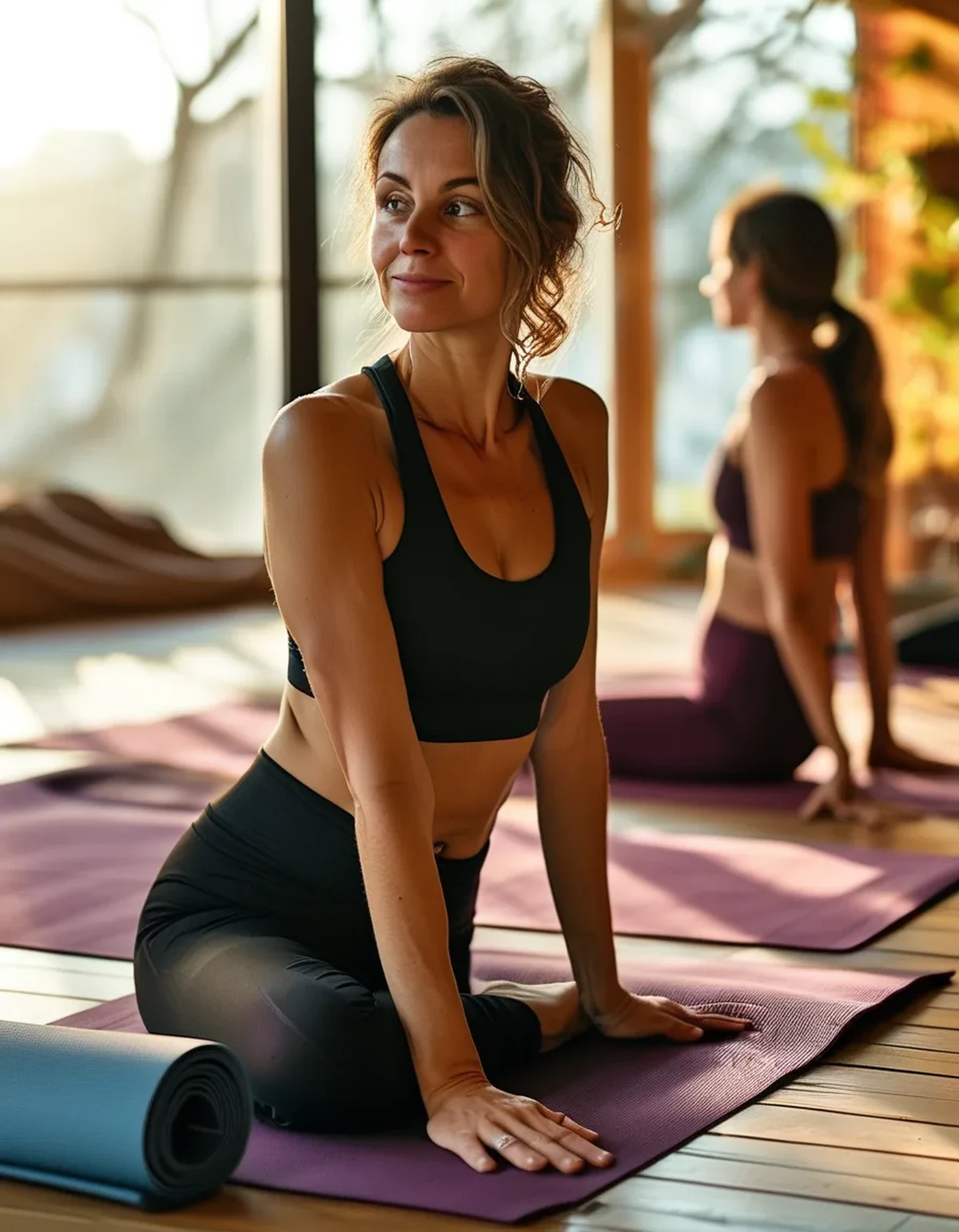
Once acclimated, the class becomes trainable rather than survivable, and this is where progression starts.
Consider adding a third class, if two feel comfortable and you are recovering well. Three is a reasonable long-term frequency for most people. Beyond three, the returns diminish and the recovery cost rises, particularly with the added cardiovascular load of the heat.
Add something the class does not provide. Hot pilates builds muscular endurance, control, and core capacity well. It does not build maximal strength, it does not load bone progressively, and it does not develop aerobic capacity the way sustained cardio does. Two hot pilates classes plus one strength session plus some walking or cycling is a far more complete week than four hot pilates classes.
Start tracking something. Hold times, the exercises you can complete without breaking form, how far into class you last before your form degrades. Without a metric, an eight-week plateau is invisible.
Reassess honestly at week eight. Do you feel better? Are you stronger in ways you notice outside class? Do you look forward to it? If the answer is no across all three after eight weeks and full acclimation, unheated pilates or reformer work delivers most of the same benefits without the heat load, and that is a perfectly good outcome of the experiment.
What nobody tells beginners about hot classes
The heat does not detoxify anything. Detoxification is performed by your liver and kidneys, and sweat is overwhelmingly water and electrolytes. Sweating a lot is thermoregulation working, not toxin removal.
Weight lost in class is water and returns within hours. Weighing yourself before and after is a useful way to estimate your sweat rate for hydration planning — roughly one litre of fluid per kilogram lost — and a useless way to track anything else.
Heat increases flexibility during class, temporarily. Warm tissue is more extensible, so your range looks better in the room than it does at home. This creates a real risk of pushing past your controlled range, and it means the flexibility gains do not automatically transfer. Work at a range you can control unheated, not the maximum the room allows.
Grip is a genuine problem and a solvable one. A mat towel is not an optional accessory; without one, plank and downward positions become slip management. Buy one before your second class.
Instructor style varies enormously, more than in most disciplines, because hot pilates is not a standardised certification. Try three instructors before deciding about the format. Plenty of people who disliked hot pilates disliked one teacher’s version of it.
You will feel flat afterwards for the first few weeks. Combined heat and exercise stress produces genuine fatigue, and it resolves with acclimation. Scheduling classes on days you have nothing demanding afterwards makes the first month considerably easier.
FAQ: Hot Pilates Questions, Answered
What should I eat before a hot class?
Something small and carbohydrate-based 60 to 90 minutes before — a banana, toast, a small yoghurt. Training heated on an empty stomach makes lightheadedness much more likely, and a heavy meal is uncomfortable in a warm room. Avoid anything high in fat or fibre immediately before.
How much should I drink?
Aim to be well hydrated across the day before, drink around 400 to 600 ml in the two hours before class, sip during, and replace roughly 1.5 times what you lost afterwards — weigh yourself before and after once to learn your rate. Include sodium in the post-class replacement.
Who should avoid hot pilates?
Anyone pregnant should get medical advice first, as raised core temperature carries specific considerations. It is also not appropriate without clearance for people with cardiovascular conditions, uncontrolled blood pressure, multiple sclerosis or other conditions with heat sensitivity, or a history of heat illness. If you take medication affecting heart rate, blood pressure, or sweating — including some antihistamines and diuretics — discuss it with your prescriber. This is general information, not medical advice.
Is hot pilates better than regular pilates?
Not inherently. The pilates provides the training effect; the heat adds a cardiovascular stressor and makes the experience more intense. Some people find that enjoyable and motivating, and enjoyment drives attendance, which matters more than any of the physiology. Others get the same benefit from an unheated room with less recovery cost.
TL;DR:
- Start at two classes a week and hold there for at least five weeks; heat acclimation takes 10–14 exposures.
- Weeks three to five are the standard quit point — that is the awkward middle, not a verdict.
- Hydrate from the day before, include sodium, sit near a vent, and buy a mat towel.
- Work in the range you can control unheated; the room’s extra flexibility does not transfer.
- Combine with one strength session a week rather than adding a fourth hot class.
Give it the full eight weeks before deciding. The version of hot pilates you experience in week one and the version you experience in week eight are barely the same activity.
See It in Motion
Seen here: High Waist Bootcut Yoga Pants with Side Pockets — shop it on bubblelime.com
Keep Reading
This article is for general informational and styling purposes only. Fit, sizing, and product availability may vary.