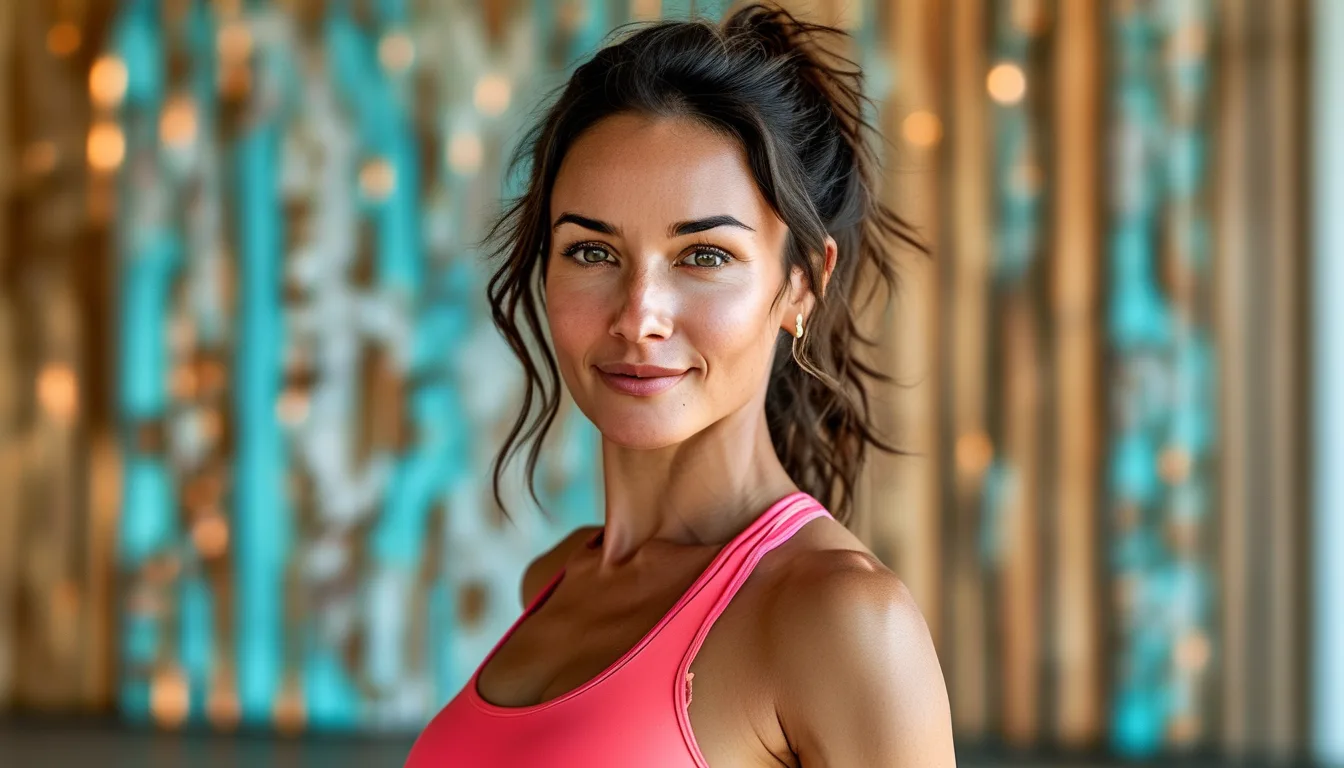
What to Wear to Hot Pilates: Fabric, Grip, and Coverage That Survive the Heat
Quick Answer: Hot pilates clothing has three jobs regular studio wear never faces: managing a room’s worth of sweat, staying gripped to your body through sliding planks and roll-downs, and not becoming transparent or heavy when saturated. The formula: fitted over loose in every slot, synthetic technical knits or high-tech blends over cotton everywhere, mid-coverage bottoms with a secure high waist, a compressive bra you could wear alone, and dark or heathered colors that keep sweat maps private. Fit is function here - anything loose becomes a wet flag within fifteen minutes.
The first hot pilates class teaches everyone the same lesson at the same minute: whatever felt cute and breezy in the mirror at home is, by the second plank series, a soaked and migrating problem. The room runs 90-100 degrees with humidity, the work is floor-based and grippy, and the dress code is physics.
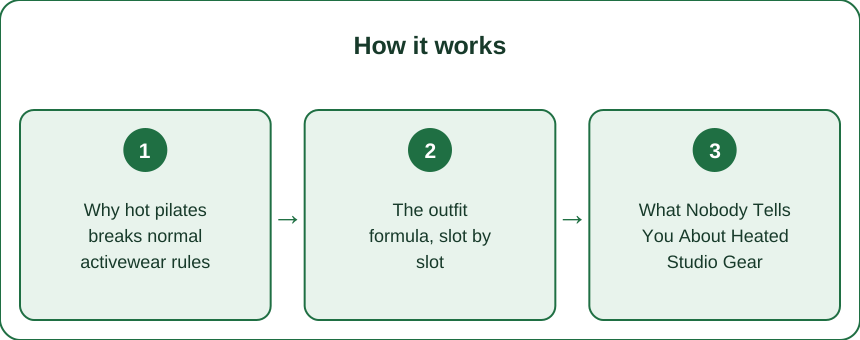
Why hot pilates breaks normal activewear rules
It is a different environment wearing the same class category.
The sweat volume is a different order of magnitude. A heated room at 95 degrees with added humidity produces drenching within the first fifteen minutes - not glow, saturation. Fabric that manages a normal mat class by absorbing is overwhelmed here; cotton tees and cotton-blend leggings hold water, gain real weight, sag away from the body, and chill you during floor holds. The entire wardrobe question becomes: what does this garment do when fully wet?
Floor work multiplies the contact problem. Unlike heated yoga’s standing balance emphasis, hot pilates lives on the mat - curls, bridges, side-lying series, planks with sliding tempo. Wet loose fabric between you and the mat wrinkles into pressure lines, catches under shoulders mid-roll, and makes precise core positioning approximate. Fitted clothing is not an aesthetic choice; it is how the instructor and your own brain can see whether your ribs are actually knitted and your pelvis actually neutral.
Grip becomes safety. Sweat-slick forearms in forearm planks, hands sliding on the mat in pike series - what you wear decides some of this. Leggings that end mid-calf leave dry skin for ankle-crossing moves; a top that stays anchored means no mid-plank tugging with a hand you needed for balance.
And transparency is a wet-fabric phenomenon. Light-colored and thin bottoms that pass every squat test dry can turn frankly sheer when saturated - the single most common regret purchase in heated classes. Saturation is the test that matters, and almost nobody runs it in the fitting room.
The outfit formula, slot by slot
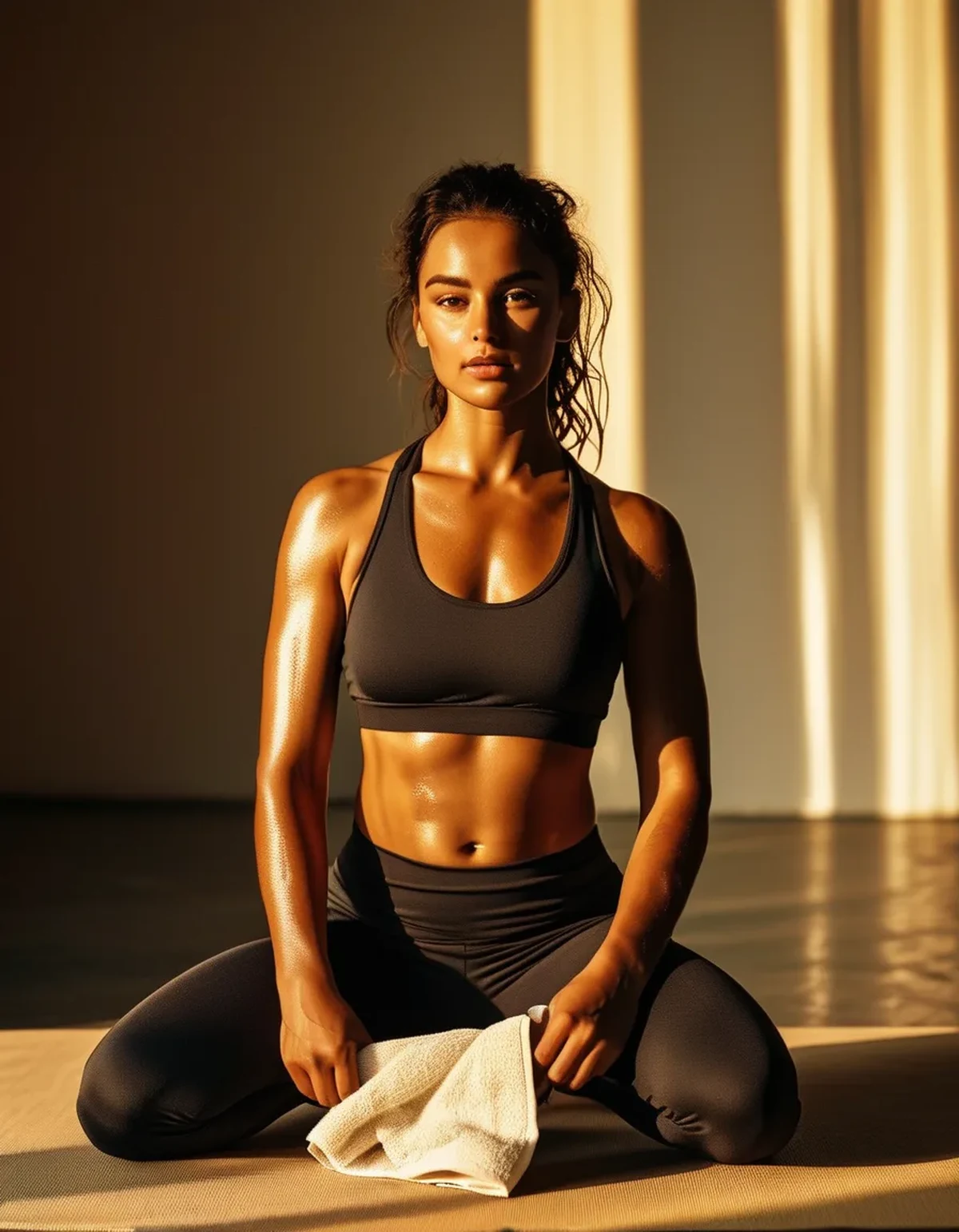
Bottoms: high-waisted, fitted, mid-thigh to full length, in a dense technical knit. The workhorses are bike shorts (7-8 inch) and 7/8 leggings in sweat-wicking performance fabric with real elastane content - the compression keeps everything anchored through roll-downs, and the high waist stays put when your hips are above your head in bridge and jackknife positions. Full-length yoga pants work if they are the technical, close-fitting kind; wide-leg and flowy styles are wrong-room choices here. The buttery-soft leggings everyone loves for brunch classes deserve one warning: the softest ultralight knits are often the first to go sheer and the slowest to feel dry once soaked - for heated rooms, choose the denser, matte, compressive end of the legging spectrum and save the peach-fuzz pairs for cool studios.
Top: a supportive bra designed to be seen, plus an optional fitted layer you expect to shed. Most regulars settle into bra-as-top within three classes - medium-support compressive styles in sweat-wicking fabric, wide underband, minimal removable padding (soaked pads hold water like sponges; many women pull them out for heated classes). If you want coverage, make it a fitted cropped tank in technical knit that clings rather than swings; a loose tee in a hot room becomes a wet curtain that falls over your face in every inversion and down-dog transition.
Colors: dark, heathered, or boldly patterned. Black, deep navy, espresso, and busy prints hide saturation maps; light gray and pale pastels broadcast them in high definition. This is purely about walking out at ease - sweat is the whole point of the room, but most people prefer to keep the cartography private.
Fabric fine print: look for polyester or nylon blends with 18-30 percent spandex, flat-lock seams (wet seams chafe), and no cotton above trace amounts anywhere - including the underband of the bra and the waistband lining, the two spots brands sneak it in.
What Nobody Tells You About Heated Studio Gear
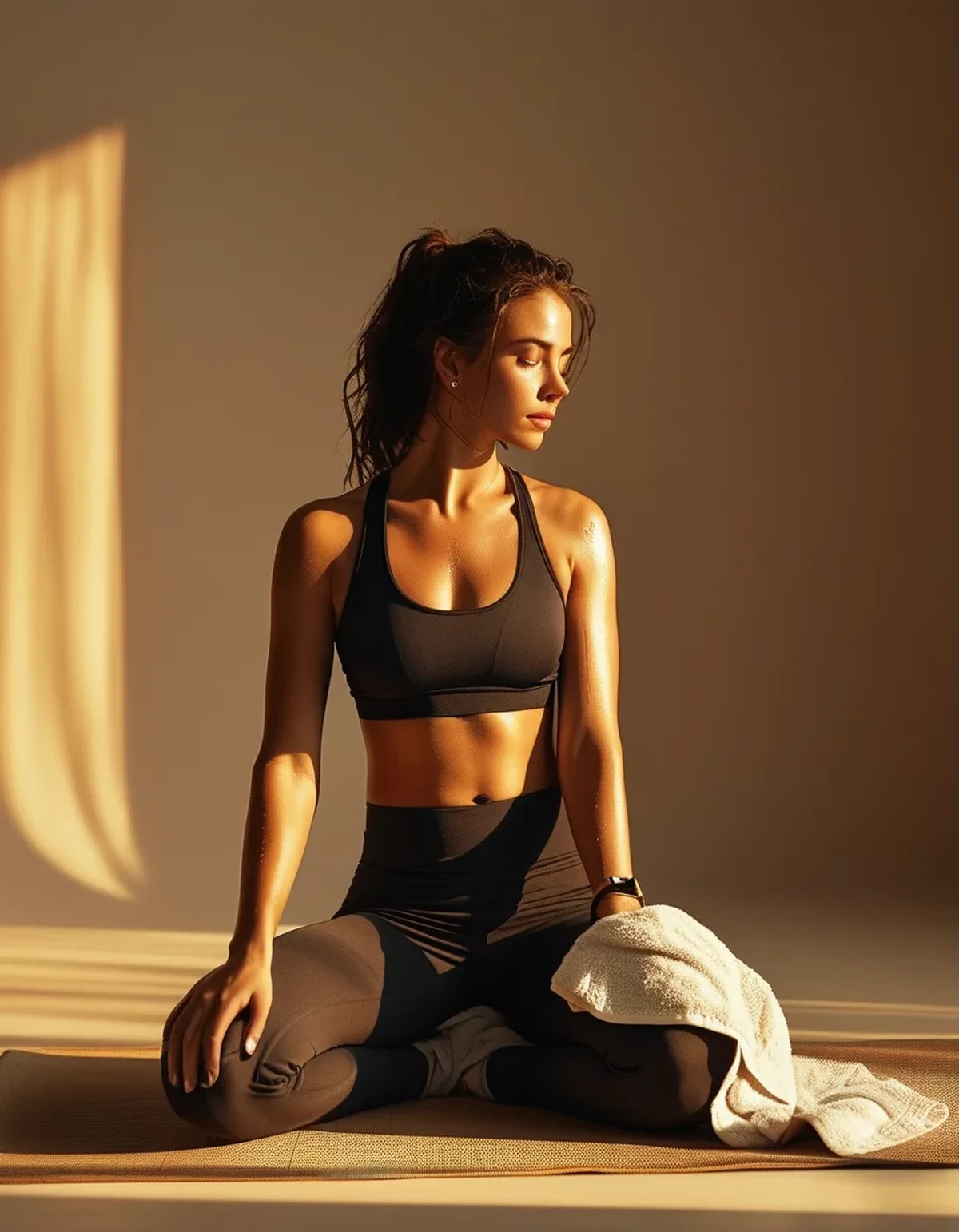
Bring two towels and assign them jobs. A full-length mat towel with grippy backing is close to mandatory equipment - it converts your slippery wet mat into traction and absorbs the floor-work sweat that otherwise pools under your spine. The second, small towel is for face and forearms only; the moment it touches the floor it changes teams. Studios sell this as an accessory; regulars treat it as part of the outfit.
Your gear needs a wet-exit plan. Whatever you wear will leave the room wringable. A small wet bag or even a grocery sack in your tote keeps the soaked set from marinating your keys, and a dry layer for the drive home - loose tee, joggers - matters more in fall and winter, when walking out drenched into cool air is a genuine chill. The post-class outfit is part of the outfit.
Jewelry and hair have physics here too. Rings slide off swollen wet fingers mid-class and vanish under reformers; necklaces relocate to your face in inversions. Hair wants to be fully off the neck - high bun or braid crown beats a ponytail that paints sweat across your mat in every roll-up. The pros arrive stripped down like swimmers, which is roughly the right mental model.
Wash the set differently than your other activewear. Heated-class gear carries triple the sweat load - rinse it in the shower with you or soak it before it hits the hamper, wash cold without fabric softener (softener coats technical fibers and murders wicking), hang dry. A set that smells baked-in after three classes was hampered wet three times, not defective.
And barefoot is standard, grip socks are welcome. Most hot pilates mat classes run barefoot; if your studio uses equipment or you prefer coverage, grip socks with real silicone tread earn their spot - wet bare feet on a wet mat is the one slip source towels do not fully solve.
Buying and testing before your first class
Run the audition at home, not mid-plank.
The saturation test. Take the candidate bottoms, soak a section under the faucet, wring lightly, and hold them stretched over your hand in bright light. Sheer when wet means sheer in class - this two-minute test filters out the regret purchases the squat test misses. Do the same for any light-colored bra.
The floor rehearsal. In the full outfit, on a mat at home: one roll-down, one bridge with a slow march, one forearm plank with knee drives, one side-lying leg series. You are checking four failure points - waistband rolling when hips lift, bra gaping in the chest-down positions, hem riding where skin meets floor, and any seam you can feel against the mat. Fifteen minutes of rehearsal beats fifty minutes of mid-class adjusting.
Buy the second set only after the first survives three classes. Heated classes are where activewear goes to be stress-tested; elastic quality, seam strength, and odor behavior reveal themselves by class three. The brands that survive become your repeat purchase - and you need at least two sets in rotation, because heated-class laundry cadence is unforgiving.
Budget where the sweat is. If forced to choose, spend on the bra and the bottoms - the two garments doing structural work while saturated - and save on the optional tank layer. A mid-range technical set outperforms a luxury cotton-blend one in this room every single time; fiber content beats logo.
First-class kit list, complete: fitted technical bottoms, supportive wicking bra, optional fitted tank, mat towel, face towel, large water bottle (insulated, with electrolytes for classes past 45 minutes), wet bag, dry exit layer, hair tie that will not slip. Nothing on the list is exotic; everything on it gets used by minute twenty.
FAQ: Hot Pilates Clothing, Answered
Can I wear regular leggings to hot pilates?
If they are fitted, synthetic, and dense enough to pass a wet-transparency check, yes - the label does not matter, the fabric behavior does. Cotton-heavy leggings and ultralight soft knits are the two categories that fail: the first gets heavy and cold, the second goes sheer. When in doubt, run the faucet test at home first.
Shorts or leggings for a heated class?
Both work; the trade is grip versus heat. Bike shorts run cooler and free the calves, but bare thighs on a wet mat can slide in side-lying and plank series - the mat towel mostly solves it. Longer leggings add fabric grip and coverage at a small heat cost. Many regulars own both and choose by class style.
Do I really need a mat towel, or is it an upsell?
For floor-based heated classes it is closer to equipment than accessory: it restores traction on a sweat-slick mat, keeps floor work hygienic, and doubles the life of your mat. Grippy-backed versions stay put through sliding movements. If you buy one thing beyond clothing, buy this.
What should I wear under leggings for a hot class?
Either nothing or a thin wicking layer, by preference - what matters is avoiding cotton underwear, which holds sweat exactly where chafing starts. Seamless synthetic styles or going without are both standard practice; wet cotton is the only wrong answer in the room.
Why do my hot pilates clothes smell even after washing?
Sweat-soaked synthetics left wet in a hamper grow the smell into the fiber, and fabric softener seals it in while killing wicking. The fix: rinse or soak immediately after class, cold wash with sport detergent or a vinegar cup, hang dry. Chronic offenders can be revived with an overnight vinegar-water soak - and prevented with the rinse habit.
TL;DR:
- Judge every garment by what it does saturated: fitted beats loose, dense synthetics beat cotton and ultralight soft knits, dark beats pale.
- The formula: high-waisted technical bike shorts or 7/8 leggings, a compressive wicking bra you could wear alone, optional fitted tank you expect to shed.
- Two towels with assigned jobs - grippy mat towel as equipment, face towel that never touches floor - plus a wet bag and dry exit layer.
- Test at home: faucet saturation check for sheerness, fifteen-minute floor rehearsal for waistband, bra, and hem failures.
- Rinse gear immediately, cold wash, no softener, hang dry - heated-class laundry is part of the sport.
The room is going to win the sweat contest no matter what you wear. Dress so that it is the only contest you lose.
See It in Motion
Seen here: Super High Waist Embossed Yoga Leggings with Inner Pocket — shop it on bubblelime.com
Keep Reading
This article is for general informational and styling purposes only. Fit, sizing, and product availability may vary.